There's been a Google product of mine that I *really* love, and that's Google News Archive. It's been a very, very rich source of history for me, as the newspapers that it digitised and allowed you to browse went back quite some way - often back into the late 1800s, or even further back. This is a significant amount of history we're talking about here, and consists of many, many, many accounts of current events of the time. It was an absolute treasure trove of information.
Take, for example, the Columbian Herald. Here's a (low resolution, so that I don't get sued for copyright violations) screenshot of the issue on 28th August 1738: (click the screenshot to get a bigger picture, although not so big that you'll be able to make out the body text - again, that's to prevent any issues on copyright violation)

Now, the newspapers can still be read. For example, this newspaper issue can be seen by going to http://news.google.com/newspapers?nid=IEpB_1CIIT4C&dat=17380828&printsec=frontpage&hl=en . (I doubt that this link will be suitable for screenreaders, as the Archive seems to present digitised images rather than text.) And you can still browse the newspapers by clicking "Browse all newspapers" at the top. However, you can't *search* the newspapers any more, and this was by far the Archive's greatest strength. You used to be able to search the Archive and get back not only the articles matched, but also a very nice little bar graph showing the frequency of the search term by date, and you could click on the graph to narrow the search down to a specific time period.
This made it incredibly useful for research or even just killing time. By searching the Archive you could gain an incredibly detailed view of how things were during a specific time period by looking at different newspapers. I spent many an hour buried in the Archive, because it was just so fascinating to me. Archives are a deep personal interest of mine, and suddenly being denied access to searching this one is heartbreaking, and it worries me because who knows if the archive itself will remain accessible?
I really hope Google can reconsider on this one.
[edited 2014-01-09 to fix the URL to the newspaper; apparently news.google.co.uk doesn't work for that URL any more, but news.google.com does.]
5 Comments | Post A Comment | Add to Memories | Tell Someone | Link
I've been hesitant to post about this, as I know that both Mark and Denise read this journal, but this issue is important enough to me to post it.
So, the application phase for students to apply to organisations participating in the Google Summer of Code begins today. Dreamwidth is one of these organisations.
From the start, I haven't liked the idea of DW taking part in the GSoC, and that's because GSoC, by definition, focuses on the code. Students enter the GSoC to code, and to get money from Google for doing it. They're not there to spend ages learning about the culture.
( Thoughts on DW's community, passion and culture... )
4 Comments | Post A Comment | Add to Memories | Tell Someone | Link
Lately I've been looking at news articles from 9-10 years ago predicting what life would be like in 2010. There are some very interesting things, particularly as 10 years ago, neither 9/11 nor the Bush administration had happened yet. (Note: I'm not comparing one to the other; however, my point was that they were both significant events in the history of the world.)
Firstly, an article from December 2000 about the US national debt:
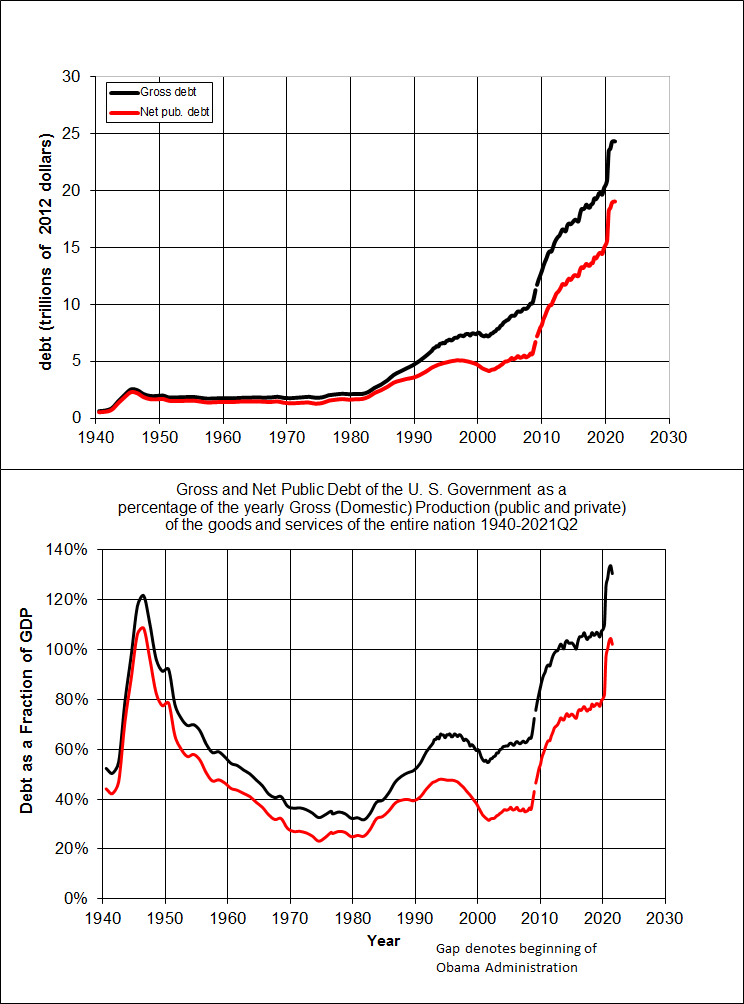
President Clinton announced new budget surplus numbers yesterday, saying the nation could be debt-free by 2010 - if the next President properly husbands the money.
The next President, of course, being George W. Bush. I think one look at
the top graph on this image shows all that needs to be said on that matter. For those who can't see the image, it shows a steady rise in US debt since just after 1980, then starting to go down from 1996-2000, before making a sudden reversal at 2001 and showing that now the US has the highest debt it's ever had.
Another interesting article was
a study made in 2001 by the European Commission about the methods people use to connect to the Internet. It tried to predict how common the various connection methods would be leading up to 2010. I made
a poll in LiveJournal's polloftheday community to see how it fared; so far, it seems that pure fibre and and fibre hybrid methods are getting virtually no use at all, unlike the prediction. That said, only 62 people have responded to the poll so far, so more is needed before much can be said.
And
according to TIME in an article from April 2001:
...the Space Transportation Association advises that the first tourist flights will leave the atmosphere in five years, holidaymakers will be in orbit by 2010, staying in space hotels by 2020 and sending kids to moon holiday camps by 2060.
Of course, we just got done killing the project to go back to the moon - not that that would have been for vacationing anyway. We have a long way to go before this is a reality.
And on March 29th, 2001,
WashingtonPost.com's Live Online had a live discussion with two guests on
the future of Internet telephony, including this gem:
Leslie Walker: What is going to happen to the traditional circuit-based telephone networks? In your view, how will they merge/coexist with the emerging Internet networks?
Tom Evslin: Witin ten years, we believe it will be gone. By 2010, the idea of a call that doesn't go over the Internet will be as starnge[sic] as the idea of an email not on the Internet would be today. Vocie[sic] over the Internet will replace the legacy PSTN both because of lower cost and much better functionality.
VoIP is definitely a lot more popular nowadays, but it certainly hasn't replaced PSTN - the system our regular phones are based on (also called POTS, for Plain Old Telephone System :D).
In case you're interested in more articles like these, check out
this Google News Archive search. It uses Google to search news articles for the words "by 2010", and restricts it to 2000-2001, and to free-to-view articles only. The results are interesting!
If you find anything interesting, please comment with your findings - I'd love to hear your take on things.
2 Comments | Post A Comment | Add to Memories | Tell Someone | Link
![[personal profile]](https://www.dreamwidth.org/img/silk/identity/user.png)


 worried